

The technological innovation of complex surface CNC machining is mainly reflected in the following aspects:
1. Accurate model for calculating five-axis cutting force and time-domain method for discriminating milling stability: this is a model for accurately calculating five-axis cutting force, which can help us better understand and control the cutting process and improve machining accuracy and efficiency.
2. research on the complete set of machining processes that have gained important applications in the high-performance machining of aerospace impeller blades: this complete set of machining processes can improve the machining efficiency and surface quality of aerospace impeller blades, and meet the requirements of high-efficiency and high-surface integrity machining.
3. The latest research results on the basic theories of digital manufacturing of complex surface parts and innovative process methods: these research results include digital modelling, simulation and process optimization of the machining process, which can help us better understand and control the machining process of complex surfaces, and improve the machining efficiency and accuracy.
However, CNC machining of complex surfaces also faces some application challenges:
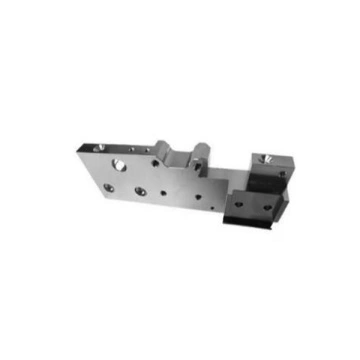
1. Difficult programming: Due to the irregular shape and boundaries of complex surfaces, there are many factors to be considered in the programming process, such as tool selection and machining route planning, which makes programming very difficult.
2. High machining accuracy: the machining accuracy of complex surfaces is very high, requiring the use of high-precision machine tools and cutting tools, as well as the need for accurate tool setting and programme verification.
3. Low machining efficiency: Due to the difficulty of machining complex surfaces, the machining efficiency is relatively low, requiring highly efficient machining methods and process parameters, as well as process optimisation and simulation of the machining.
In order to solve these application challenges, we need to continuously carry out technological innovation and optimisation, such as the use of UG for automotive model modelling, CNC machining toolpath generation and simulation of machining, as well as the use of an accurate model for the calculation of 5-axis cutting forces and a time-domain method for discerning milling stability. At the same time, we also need to strengthen the research and practice of CNC machining of complex surfaces to improve the machining efficiency and precision, to meet the needs of high-end customers such as aviation OEMs.